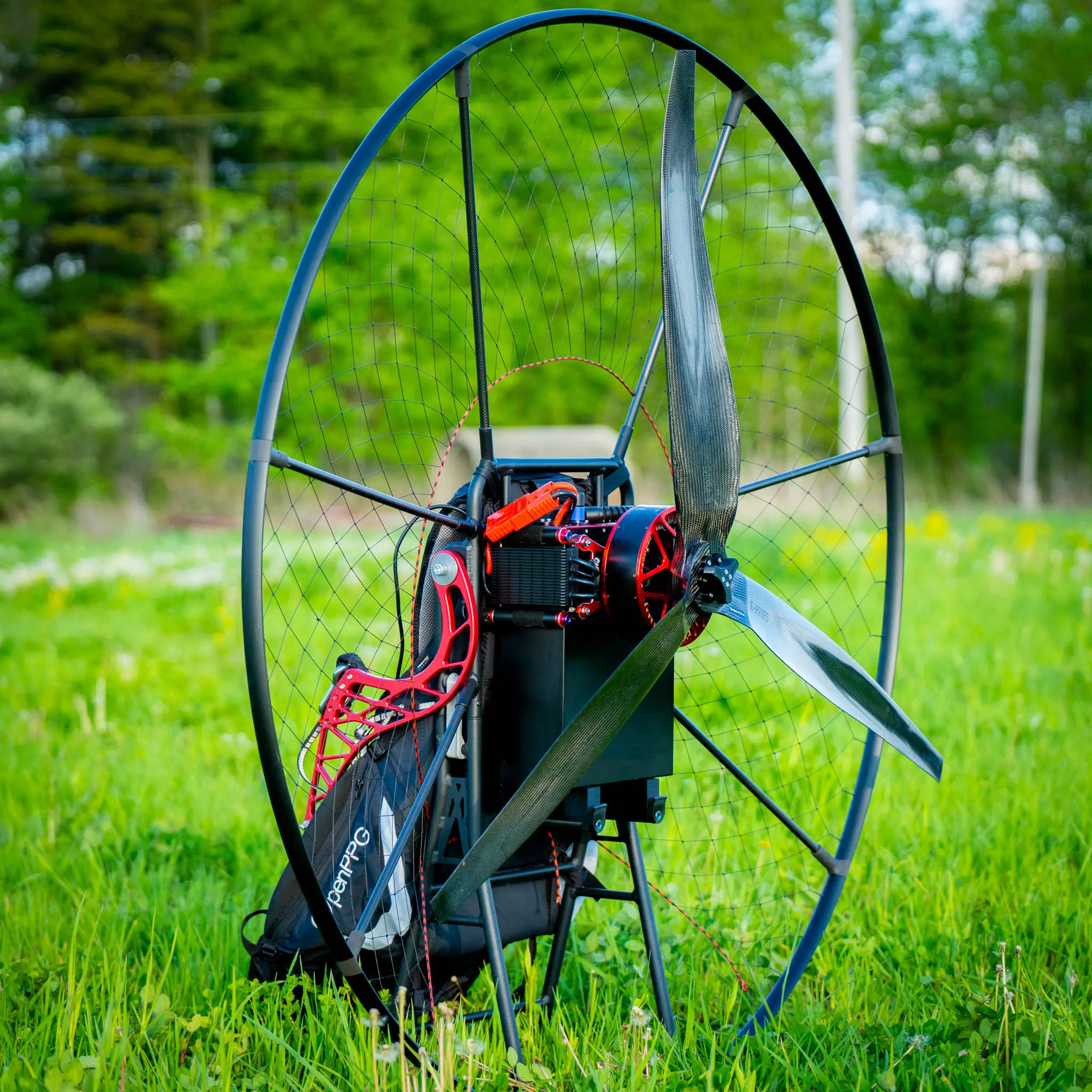
SP140 Electric in use
THE COMPLETE GUIDE

The Electric Advantage

Everything you need to know about why the future of electric is now.

Stack them up

The SP140 Electric and SP140 Gas share the same frame, but they serve different kinds of flying. Gas has the range advantage; electric is quieter, smoother, simpler, and cheaper for everyday flights.

SP140 Electric pros
Quieter than gas: ~80 dB electric vs ~90 dB gas (10 dB difference, roughly 10× less sound intensity)
Smooth: no two-stroke vibration, no pilot fatigue
Instant power, no warm-up, no pull-start
Charge at any outlet. No gas stations, no oil mixing.
One moving part, no scheduled maintenance
$0.60 per hour to operate
Packs into your car, no fuel smell
Zero tailpipe emissions
The trade-off
Cross-country flights run shorter: 50–80 min flight time vs 2+ hours with the gas unit
SP140 Gas pros
3+ hour flight time on a 16 L tank
Refuel in minutes, fuel available worldwide
Familiar for pilots coming from traditional gas paramotors
The trade-offs
~90 dB at takeoff. Ear protection mandatory.
Two-stroke vibration throughout the flight
Pull-start, warm-up, fuel mixing every time
Spark plugs, carbs, filters all need scheduled service
~$11 per hour between fuel and oil

The bottom line

Gas makes sense for the few pilots who want 2–3+ hour legs or serious cross-country. For those, we'd recommend the SP140 Gas. The beauty of the SP140 system is that the same frame lets you convert between gas and electric down the road, so the choice isn't permanent. For most people and everyday flying, electric makes more sense.

Hear the Difference

The SP140 Electric is significantly quieter than gas paramotors. Ear protection still recommended.

Whisper
20 dB
Library
40 dB
Normal Conversation
65 dB
Vacuum Cleaner
75 dB
SP140 Electric
80 dB
Lawn Mower
85 dB
Gas Paramotor
90 dB
Rock Concert
110 dB

The SP140 Electric is 10 dB quieter than gas. That is 10x less sound intensity.

Your neighbors will thank you. Fly early mornings, evenings, or near residential areas without disturbing the peace.
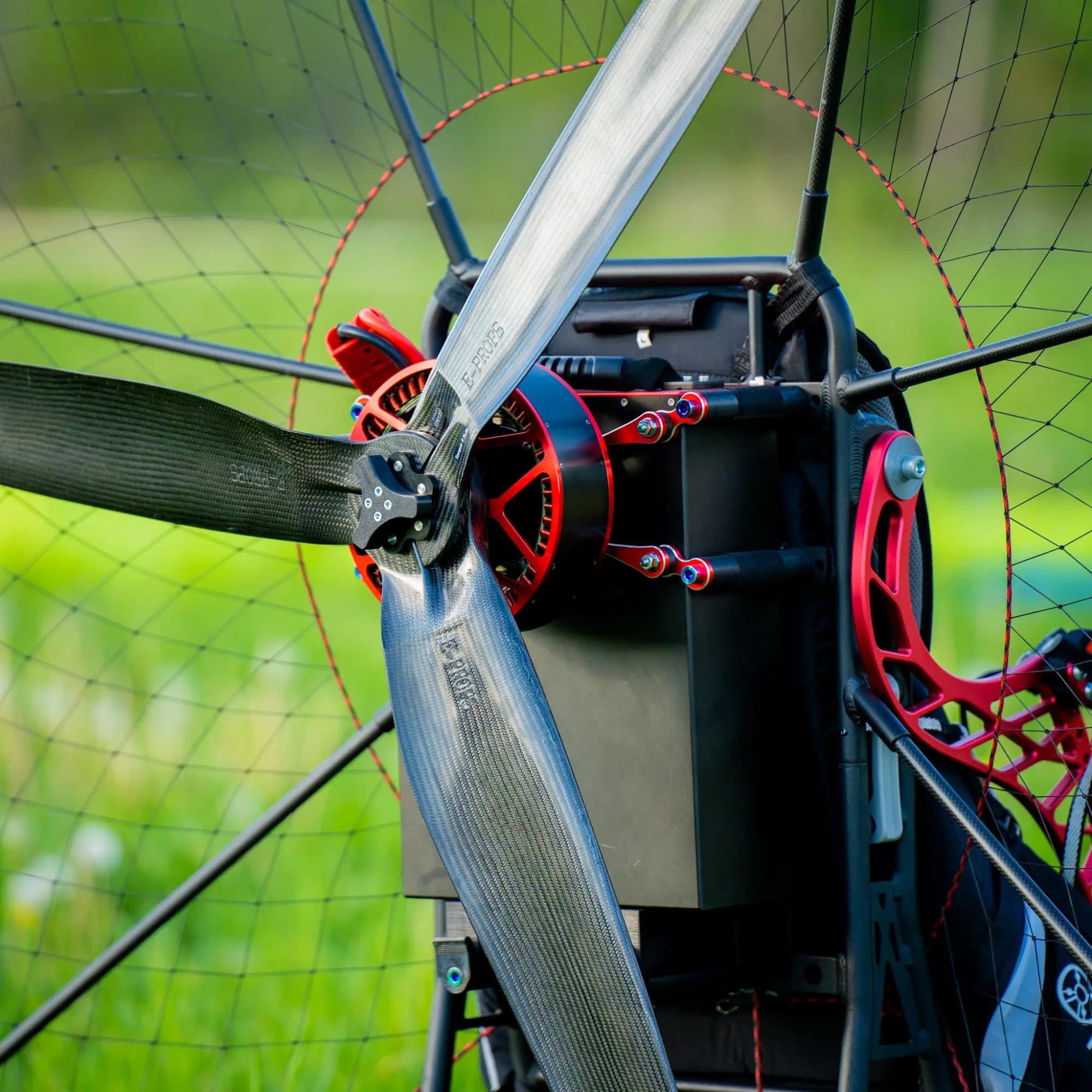
Keep your neighbors happy

Keep your neighbors happy

The SP140 Electric is significantly quieter — at takeoff, during warmup, and especially in cruise flight.

Incredibly Smooth

Instead of being rattled and shaken to the bone for the entire flight, you actually get to enjoy the air, the view, the quiet. No more two-stroke vibration in your hands, no pulsing under the harness.
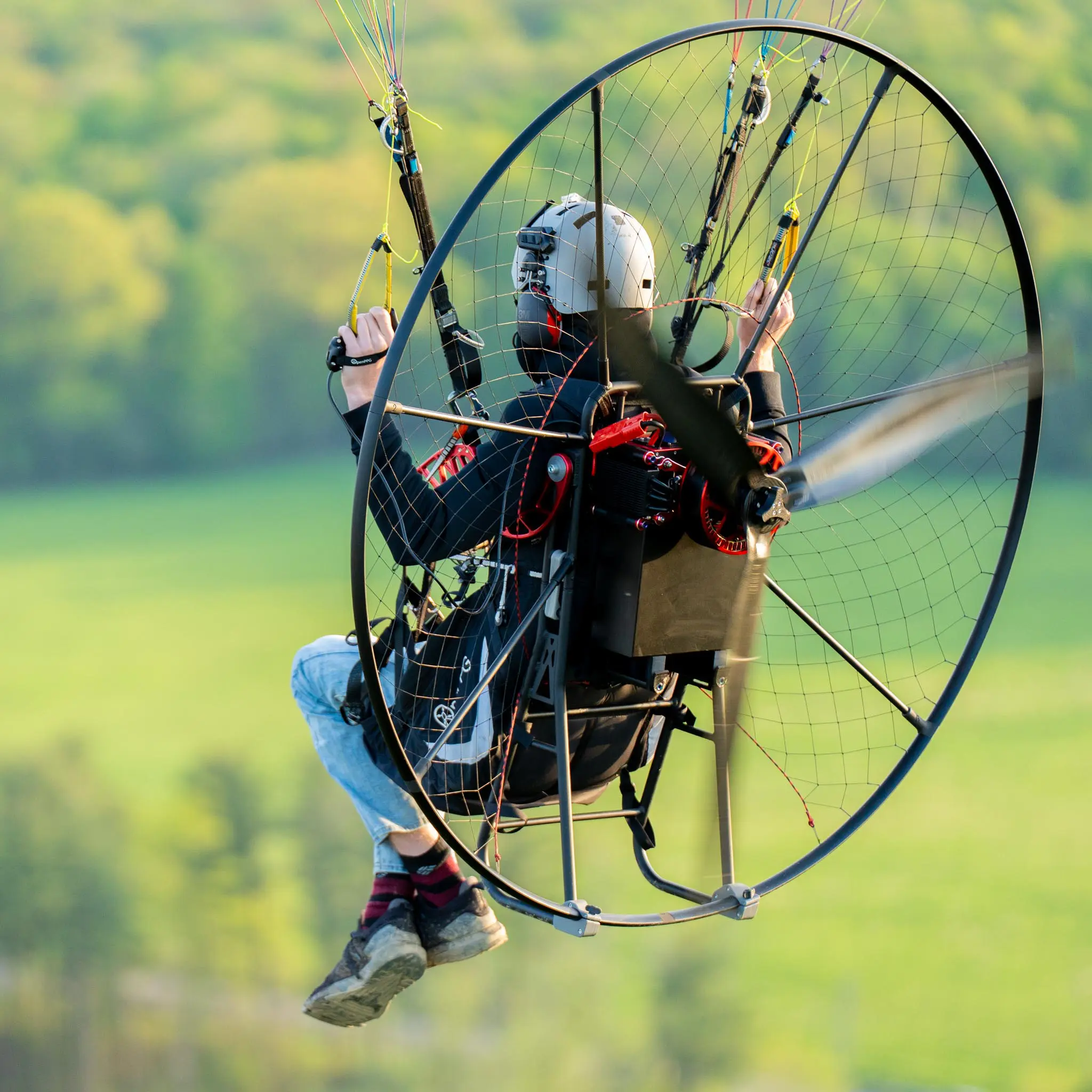
No more two-stroke vibration
A gas engine fires thousands of times a minute and every pilot feels it in their hands and back. Electric is pure rotation: no reciprocating mass, no firing pulses.
Less pilot fatigue
Completely linear thrust — no power bands, no non-linear throttle, no fighting the engine. Precision throttle control means cruise for an hour, land, and your arms still work.
A whole lot quieter
Much less noise than a gas engine. You can focus on flying instead of how loud the motor behind your head is.
Cruise control actually lets you relax
Set the throttle and let go. It just holds — no engine pulsing through the lever, no constant micro-corrections.
A calm cruise — electric flight

The True Cost of Flying

Electric costs 95% less per hour to operate than gas.

SP140 Electric$0.60/hr
Electricity: $0.60Maintenance: $0.00
Gas Paramotor$11.69/hr
$1,109
Saved per 100 hours
Electric: $60 vs Gas: $1,169
95%
Lower operating cost
$0.60/hr vs $11.69/hr
$0
Maintenance cost
One moving part, zero scheduled service

Simplicity is Reliability

Fewer parts means fewer problems, fewer service intervals, and less time on the workbench instead of in the air.

1
Moving Part
The SP140 Electric has a single moving part: the motor. That is it.
No spark plugs to replace
No carburetor to tune
No pull cord to break
No oil changes ever
No fuel filters
No exhaust system
50+
Gas Powertrain Parts
Gas engines require regular maintenance to stay airworthy.
Spark plugs every 25-50 hours
Carburetor tuning seasonally
Pull cord replacement
Oil mixing every flight
Fuel filter changes
Exhaust inspection

Ready When You Are

Plug in. Charge. Fly. That's the whole pre-flight.

Charge at any outlet
Any standard wall outlet tops up a pack. No gas station runs, no two-stroke oil mixing, no fuel smell in your car.
No pre-flight ritual
No pull starts, no warm up, no priming, no spilled fuel. Click the battery in, flip the switch, launch. Car to air in minutes.
Nothing to fuss with
No carbs to tune, no spark plugs to swap, no filters to change. Park it in the garage between flights and it just works. No mechanic, no seasonal service.

Same idea as an electric car or bike: you plug it in at home and you're done.

The SP140 also breaks down in five minutes and fits in the back of most cars. No fuel to worry about in the cabin, no trailer, no roof rack.
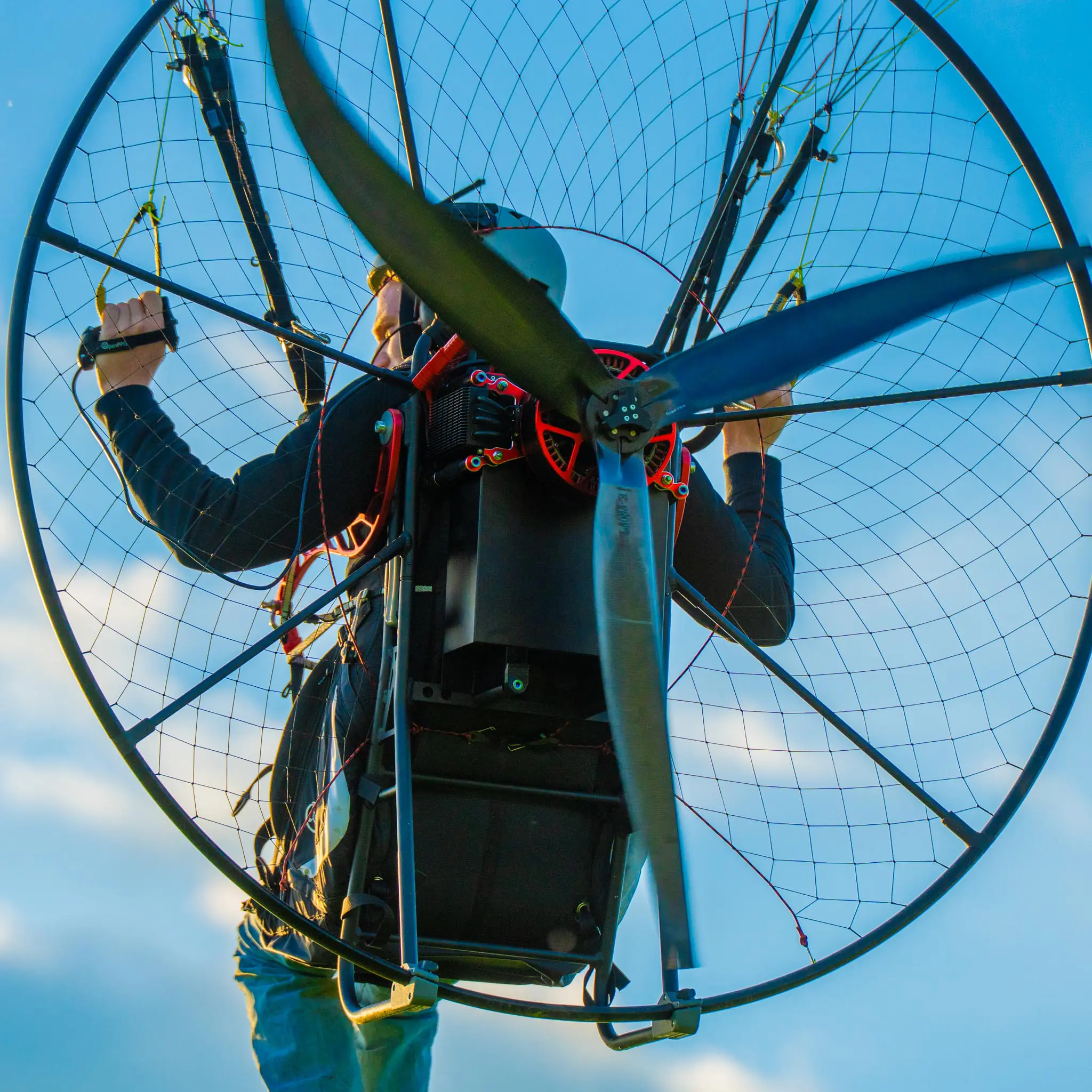
From trunk to takeoff

From trunk to takeoff

Park at the field, lift the SP140 out of the car, click the battery in, flip the switch, launch. There's no fuel mixing, no warm-up, no tuning. The prep window between arriving and being airborne is measured in minutes, not the half-hour gas pilots are used to.

Do Not Compromise on Power

165 lbs of thrust, 20% more than the most popular gas paramotors.
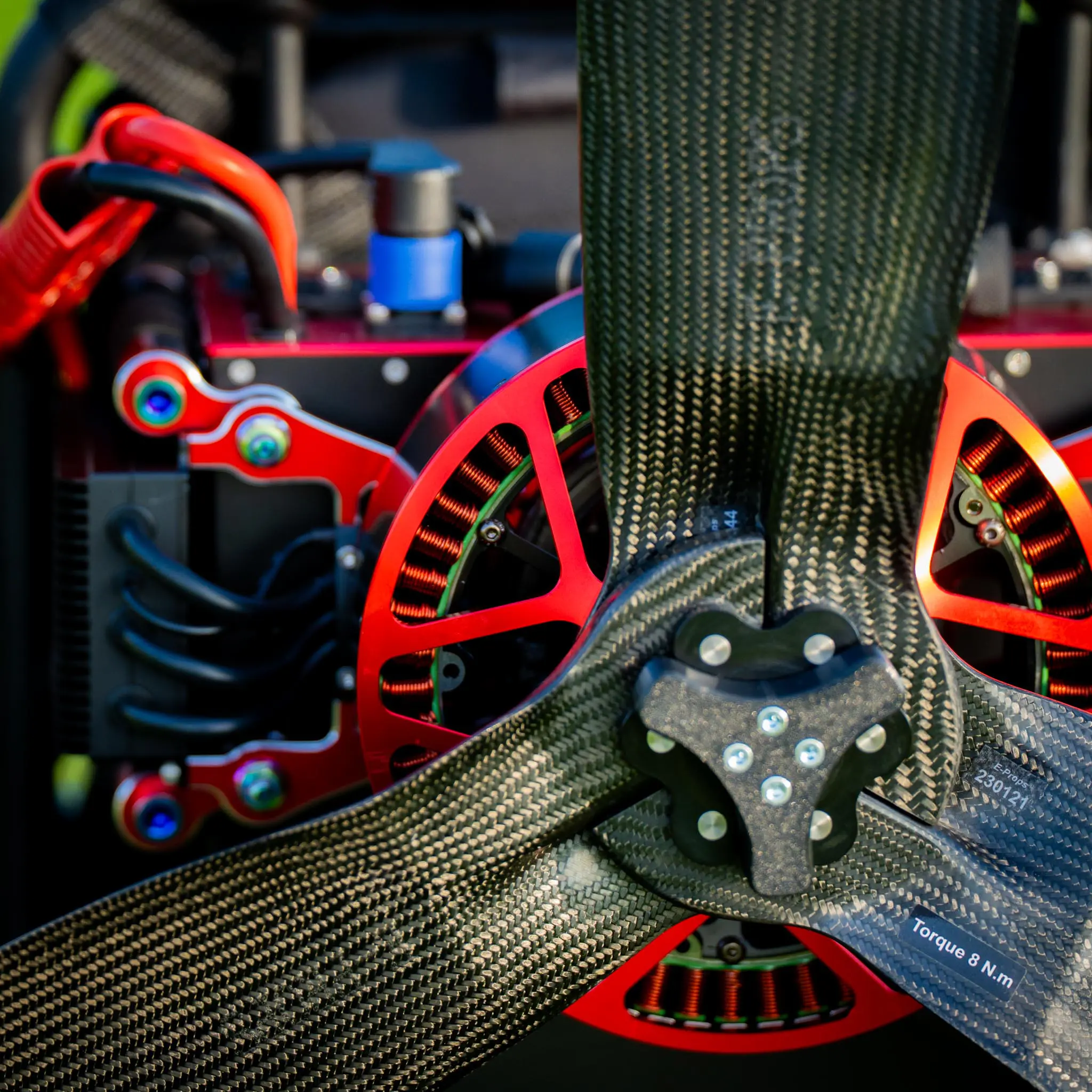
Instant Power Delivery
No warm-up period, no power band to find. Full thrust available from the moment you flip the switch.
Consistent at Altitude
No carburetor to retune for altitude or temperature changes. Electric delivers the same thrust at 15,000 feet as it does at sea level.
Cruise Control
Set your throttle position and relax. The motor maintains consistent power output for comfortable cross-country flights.
Two Power Modes
Chill mode for relaxed flying, Sport mode for maximum performance. Switch between them with a button press.
SP140 Electric motor close-up mounted in frame

Swap, Fly, Repeat

Two pack sizes, both quick-swap. Built-in diagnostics you can read from your phone. Safety watched over cell-by-cell.
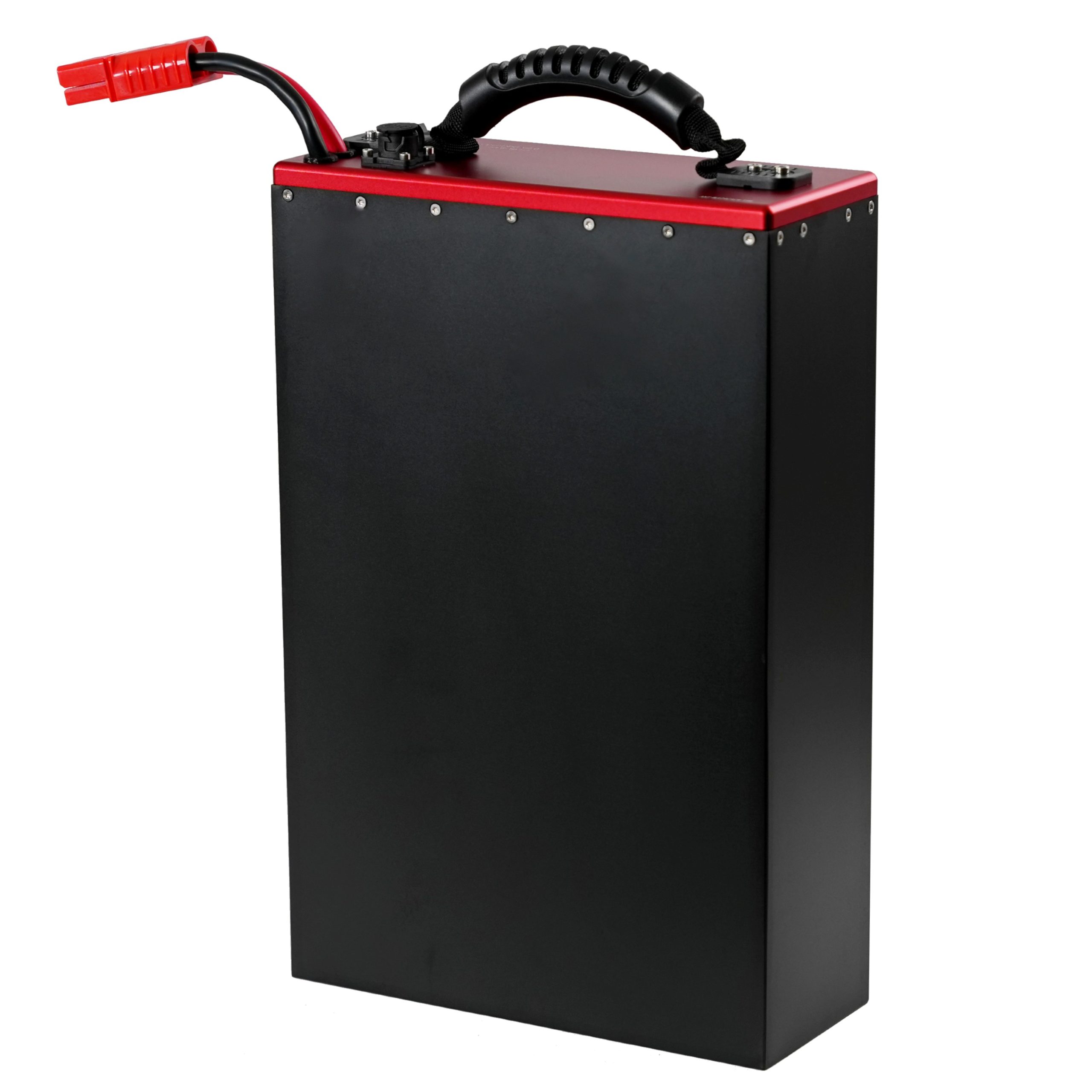

4.8 kWh Battery Pack
Quick-swap in under a minute
Slide the old pack out, click a fresh one in, and you are back in the air. Carry a spare for back-to-back flights at the field.
Built-in diagnostics
No guessing how much flight time you have left. No mirror to check fuel levels. See exactly what you have left, plus all motor diagnostics, right on your hand-controller screen.
Safety built into the pack
Active cell balancing, over and under-voltage cutoffs, short-circuit protection, and temperature monitoring. If something is off, the BMS catches it before you launch.
Lighter option available
Pick the 2.6 kWh Feather pack and the whole setup comes out to about 54 lbs all-up: on par with a gas paramotor, minus the fuel, oil, and engine maintenance.
4.8 kWh Standard
50–80 minutes of flight · ~78 lbs all-up
Full range pack for cross-country and long sessions.
2.6 kWh Feather
20–40 minutes of flight · ~54 lbs all-up
Lightweight setup for quick flights, training, and easy hiking in.
Quick-swap, fly again

Quick-swap, fly again

Land, pop the battery, drop in a fresh one, and you're back in the air in under a minute, start to finish. No fuel station detour, no waiting for a hot motor to cool, no contaminated tank. Carry a spare 4.8 kWh pack and you've effectively doubled your day.

Experience Electric Flight

165 lbs thrust, one moving part, quiet, smooth, reliable flight. The future.